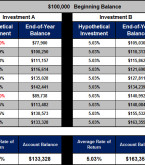
Today I want to share another example of how money isn’t math and math isn’t money by demonstrating the concepts of average rate of return on an investment and the actual rate of return. Assume you have $100,000 and you have two investment options to choose from and both offered an average rate of return of 5.03%. Read More >
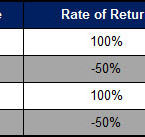
Money Isn’t Math and Math Isn’t Money – Average Rate of Return
Posted on: 08.05.14
The financial media and traditional financial advisors have us trained to make decisions based on numbers on a piece of paper. However, in my experience, money isn’t math and math isn’t money. Placing too much importance on numbers and allowing them to dictate our financial decisions is very similar to confusing the Read More >

How Can You Monitor Your Credit Profile For Free?
Posted on: 07.29.14
Because your credit scores are based on information in your credit report, it is important to make sure that the information in your credit report is accurate. You should review your credit report from each credit reporting repository at least once per year and especially before a large purchase, such as a house or a Read More >
What Makes Up a Credit Score?
Posted on: 07.22.14
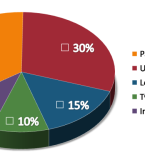
While there are 22 criteria that determine a credit score, they can be narrowed down to 5 ‘key’ criteria. Let’s look at what each category measures and some of the primary ways you earn or lose points for your individual score. 1) Payment History – This represents 35% of your credit score and is the history of Read More >
What Does Affect a Credit Score?
Posted on: 07.15.14
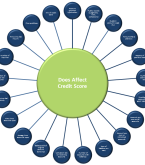
There are 22 criteria that determine a credit score and the formulas that each credit bureau uses to calculate their respective credit scores are a closely guarded secret. Some of the criteria are fairly obvious, but most are not. You can achieve a higher credit score if you understand the criteria for how you are Read More >
What Doesn’t Affect a Credit Score?
Posted on: 07.08.14
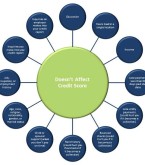
There are a multitude of factors that affect and determine your credit score. However, there are a great many things that don’t affect your credit score. Contrary to popular belief, you can impact your credit score both positively and negatively. You can achieve a higher credit score if you understand the criteria Read More >